The story of Jesus’ birth is meant to shape more than a season; it’s meant to shape the rhythm of your life. When you bring that story into your conversations, your traditions, and the ordinary moments at home, you’re building a legacy of faith and love that points your family to the Savior again and again. Each retelling becomes a reminder that God’s story isn’t finished. It’s still unfolding right where you live.
“Let the peace of Christ rule in your hearts, since as members of one body you were called to peace. And be thankful.” ~ (Col. 3:15)
The Greek word for “rule” here is Brabeúō – properly, “act as an umpire” (also the meaning of this term in classical Greek, as with Isocrates and Demosthenes). When we let the peace of Christ rule our hearts, we allow God to “make the line calls,” “direct our emotional responses” “rule our thoughts with His thoughts” thru the power and presence of the indwelling Holy Spirit.
Colossians 3:15 instructs believers to allow the peace of Christ to “rule” or umpire in their hearts, meaning that Christ’s peace should govern their decisions and actions, functioning like a referee in a game. This inner peace acts as a guide and a decision-maker for the Christian life, helping believers discern God’s will and encouraging gratitude and thankfulness as the peace of Christ grows. Practically, it means allowing the calm assurance of God’s presence to settle conflicts, guide your choices, and foster a spirit of thankfulness in response to Christ’s work in your life.
F. Scott Fitzgerald’s quote “life starts all over again in the fall” suggests that the crisp autumn season provides a sense of new beginnings and renewal, much like the start of a new school year or a fresh start after a period of change. The quote, often attributed to the character Jordan Baker in The Great Gatsby, uses the change of seasons as a metaphor for starting anew in life.
Here’s a breakdown of the quote’s meaning:
New Beginnings: Fall is a time when many people experience a fresh start, whether it’s returning to school after a summer break, beginning a new job, or simply feeling a renewed sense of purpose as the weather changes.
Metaphorical Connection: The cool, crisp air of fall can symbolize a refreshing change, clearing out the clutter of the past and creating a clear path forward for new experiences and opportunities.
Juxtaposition with Endings: Interestingly, fall also represents the end of summer and the natural world winding down. Fitzgerald’s quote highlights the contradictory nature of this season, where endings can pave the way for new beginnings
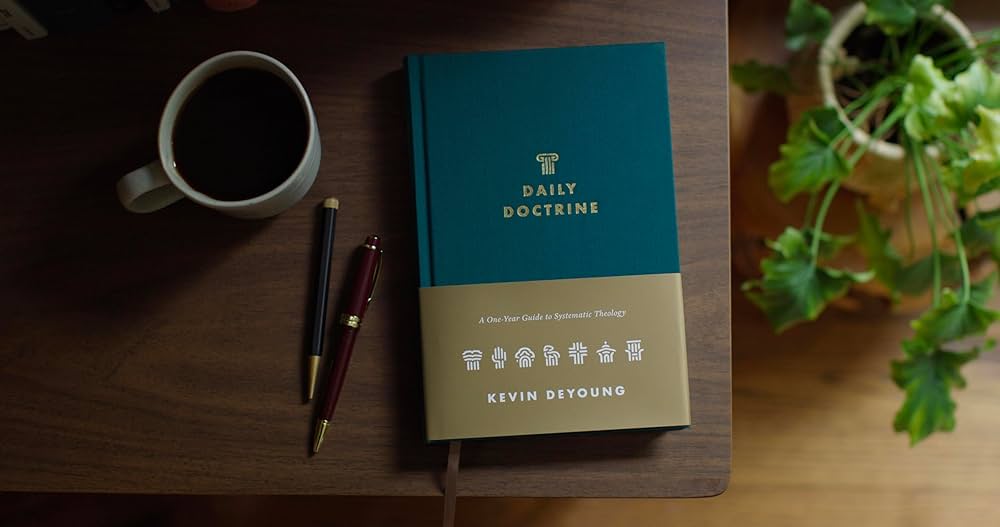
Kevin DeYoung’s Daily Doctrine: A One-Year Guide to Systematic Theology is a commendable effort to make a weighty subject accessible to a broad audience. True to its title, the book is structured as a year-long devotional, with 260 readings (five per week) that break down the major tenets of Christian theology into manageable, bite-sized pieces.
DeYoung’s strength as a writer shines through in his ability to distill complex theological concepts into clear and concise prose. He tackles everything from the doctrine of Scripture to eschatology, all from a distinctly Reformed perspective. While the book is an excellent introduction for those new to systematic theology, it also serves as a valuable refresher for pastors and seasoned students of the Bible.
The devotional format is perhaps the book’s greatest asset. Each reading is short enough to be incorporated into a daily routine, yet substantive enough to provide real food for thought. DeYoung’s writing is engaging and often witty, making the journey through systematic theology more of a delightful exploration than a dry academic exercise.
While the book is highly recommended, readers from different theological traditions may find points of disagreement, particularly on topics like covenant theology and baptism. Additionally, those looking for a purely devotional work with direct daily applications might find Daily Doctrine to be more focused on theological instruction.
Overall, Daily Doctrine is a valuable resource for anyone looking to deepen their understanding of Christian theology. It is a testament to the idea that doctrine is not just for the seminary classroom, but for the daily life of every believer.
Carl R. Trueman’s “The Rise and Triumph of the Modern Self: Cultural Amnesia, Expressive Individualism, and the Road to the Sexual Revolution” is a dense yet compelling exploration of how Western culture has arrived at its current understanding of selfhood. Trueman argues that the sexual revolution is not the cause but rather a symptom of a much deeper shift in how we perceive our identities. This shift, he contends, is the culmination of centuries of philosophical and cultural changes that have enthroned “expressive individualism”—the belief that our inner feelings and desires are the ultimate source of our identity and moral authority.
Trueman masterfully traces the intellectual lineage of this modern self, starting with Jean-Jacques Rousseau and the Romantics, who located authenticity in inner sentiment. He then guides the reader through the ideas of Friedrich Nietzsche, Karl Marx, and Charles Darwin, who, in their own ways, challenged traditional sources of meaning and morality. A significant portion of the book is dedicated to the influence of Sigmund Freud, who, according to Trueman, was instrumental in sexualizing our understanding of the psyche, making sexual desire a central component of identity.
The book excels in connecting these seemingly disparate philosophical threads to the cultural landscape of the 21st century. Trueman demonstrates how the ideas of these thinkers have trickled down into popular culture, shaping our assumptions about everything from personal relationships to political discourse. He argues that the modern self, severed from external authorities like family, religion, and community, has become both fragile and demanding, seeking constant validation from society.
However, “The Rise and Triumph of the Modern Self” is not without its challenges. The book’s academic rigor and dense philosophical discussions may prove daunting for some readers. While Trueman provides a brilliant diagnosis of our cultural moment, he offers limited practical solutions for navigating this new landscape. Some critics have also pointed out that his focus on a particular intellectual history may downplay other economic and social factors that have contributed to the rise of individualism.
Despite these minor drawbacks, Carl R. Trueman’s work is a significant and timely contribution to our understanding of the modern world. It is an essential read for anyone seeking to comprehend the deep-seated cultural currents that shape our contemporary debates about identity, sexuality, and the meaning of a fulfilling life. “The Rise and Triumph of the Modern Self” is a challenging but ultimately rewarding book that will leave readers with a new framework for understanding the world around them.
In “Knowing God’s Truth: An Introduction to Systematic Theology,” Jon Nielson offers a clear and accessible entry point into what can often be an intimidating subject. Published by Crossway in 2023, this book is designed for those new to theology, including students and young adults, who desire a foundational understanding of Christian doctrine.
Nielson structures the book around the core tenets of systematic theology, dedicating chapters to topics such as the doctrine of God, Scripture, humanity, sin, and the church. A standout feature of the book is its practical and devotional approach. Each chapter is broken down into smaller, digestible sections that include Bible readings, memory verses, and prompts for prayer, encouraging the reader to not just learn about God, but to engage with Him personally.
The writing is straightforward and largely avoids overly technical jargon, making complex theological concepts understandable to the layperson. While some readers may find the exclusion of certain nuanced theological debates a drawback, Nielson’s focus remains on presenting a solid, orthodox framework of Christian belief from a Protestant perspective.
Overall, “Knowing God’s Truth” serves as an excellent introductory text. It is a valuable resource for individuals seeking to build a more robust theological foundation for their faith in a way that is both intellectually stimulating and spiritually formative.









 David Crews Ph.D. Author & Speaker